

Affiliation Disclosure & Disclaimer:
The managing principal of Ridire Research is affiliated with a private investment fund that holds long positions in the securities discussed herein (MDT) which could influence the views expressed. This publication is for educational and informational purposes only. Any performance referenced is illustrative and tracked on a per-article basis, not as part of a model portfolio or investment program. Nothing herein constitutes investment advice, a recommendation, or a solicitation. → Ridire Research Substack Disclaimer
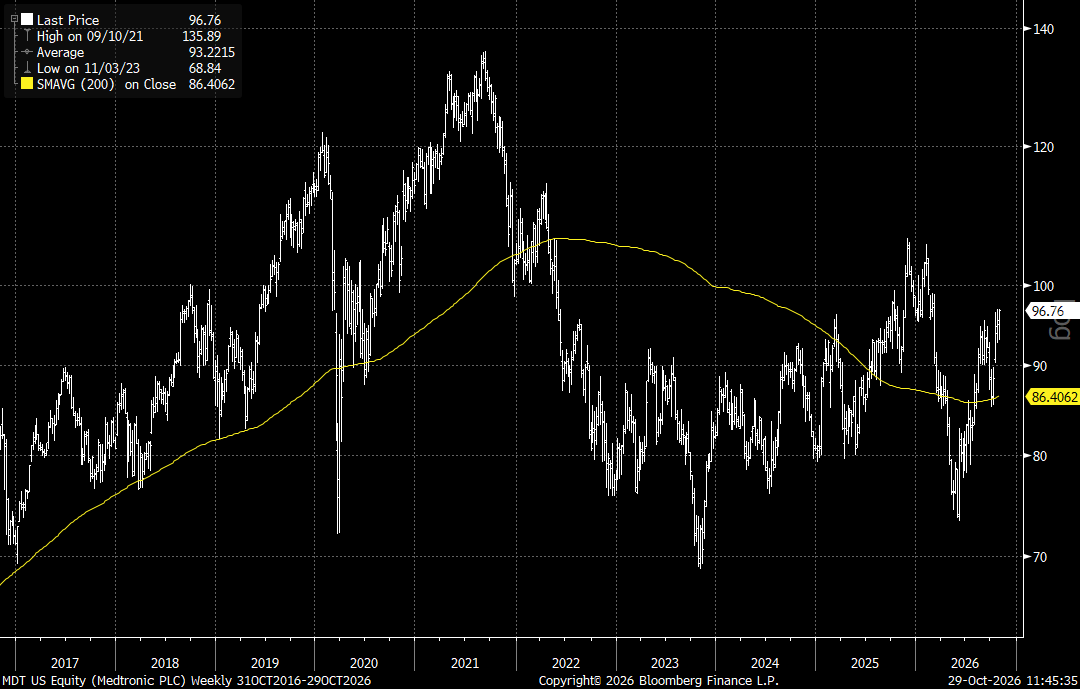
Medtronic ($MDT) is a medical-device company whose products range from pacemakers and defibrillators to spinal implants and surgical robots. It began in 1949 as a medical-electronics repair business in a Minneapolis garage. Its early breakthrough came in 1957, when co-founder Earl Bakken developed a wearable, battery-powered pacemaker after a power outage exposed the vulnerability of devices that needed to be plugged into the wall.
Today, Medtronic is spending heavily to establish its next generation of procedure businesses. New ablation systems are going into hospitals, while imaging, navigation and robotics extend its role in surgical care. Those placements create opportunities to supply the catheters, implants and instruments used in the procedures that follow.
We think those repeat sales can support an earnings recovery as the installed base matures even as the initial equipment rollout slows. Ablation leads the case, supported by a large established cardiac business. In spine and robotics, newer technology also helps defend existing procedure revenue.
The expense of winning those relationships is already visible. The return depends on how much Medtronic can earn from them after equipment concessions, clinical support and competition take their share.
Download the report below for the full investment case.
