


Disclaimer:
This publication is for educational and informational purposes only. Any performance referenced is illustrative and tracked on a per-article basis, not as part of a model portfolio or investment program. Nothing herein constitutes investment advice, a recommendation, or a solicitation. → Ridire Research Substack Disclaimer
Table of Contents
Executive Summary
Company Overview
The Setup
Casual Mechanism
Timeline
Key Risks
Conclusion
Executive Summary
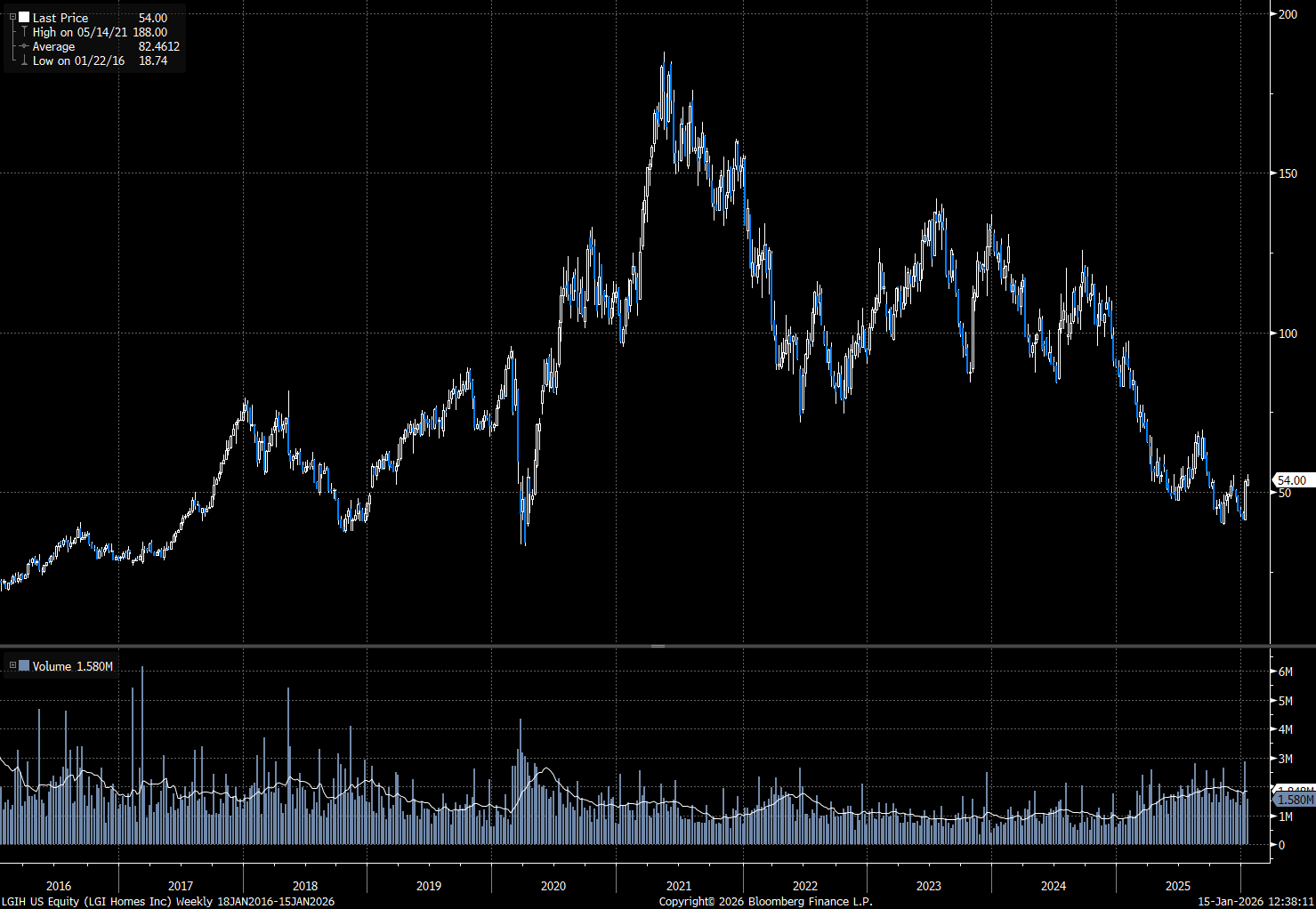
LGI Homes (LGIH) is a business driven more by monthly affordability than headline pricing.
As financing conditions ease, entry-level buyers can return quickly, homes sell faster, and existing inventory begins to move which is enough to improve earnings even before profits per home recover. What it does not do immediately is lift margins. Keeping payments affordable often requires incentives and working through higher-cost inventory, which can hold margins down in the short term.
The opportunity is recognizing that the early phase of improvement shows up first in volume and operating leverage, with margin recovery coming later.
Company Overview
LGI Homes is a U.S. homebuilder focused on attainable, entry-level housing. The business is built around a standardized product, fast inventory turnover, and a sales process designed to convert renters into first-time buyers. What matters for this thesis comes down to how the company creates demand and how it manages risk when demand softens. Two structural features matter for this thesis:
Affordability is the product: LGI does not compete on design or customization, it competes on the monthly payment. Management explicitly frames the sales process around getting buyers to a payment they can qualify for, which makes demand highly sensitive to financing conditions and borrowing costs.
Wholesale acts as a pressure valve: Alongside retail sales, LGI sells a portion of homes in bulk to institutional buyers, primarily single-family rental operators. This channel helps keep construction moving and inventory from backing up when retail demand slows, but it typically comes with lower margins than traditional home sales.
It is worth noting that LGI also operates mortgage and insurance businesses through joint ventures. These help improve buyer conversion and enable financing incentives.
The Setup: Demand Improves First, Margins Lag
Easier financing tends to bring buyers back quickly, especially at the entry level. As borrowing conditions improve, more households qualify, traffic picks up, and homes begin to sell at a faster pace. That early demand response is real and usually shows up before anything else.
Where things get less intuitive is on profitability. For LGI Homes, supporting affordability has historically meant relying on incentives, adjusting sales mix, and working through higher-cost inventory accumulated during tougher periods. Those actions help move homes and stabilize the business, but they can keep margins under pressure even as demand improves.
That tension is the core of the setup: falling rates can clearly help volumes and sales momentum, while profitability per home takes longer to recover. The early benefit shows up in activity and cost absorption, not immediately in cleaner margins.
Causal Mechanism
Easier payments bring buyers back first: LGI Homes sells to buyers who sit right on the edge of affordability. For this group, a small improvement in financing can be the difference between qualifying for a mortgage or remaining renters. When that line is crossed, demand responds quickly. This shows up first in sales activity, more orders, a growing backlog, and faster inventory turnover, well before it shows up in profitability.
Why margins don’t snap back right away: Even as demand improves, profits per home can lag. Keeping homes affordable often requires continued incentives, preferred financing programs, and selective discounting. At the same time, the company may lean more on wholesale sales to keep construction moving when retail demand is still rebuilding. Finally, there is a timing issue: homes being sold today were often built when land, labor, or financing costs were higher. All of this can keep margins under pressure even as the business itself is clearly improving.
Where earnings actually improve first: The early earnings lift comes from operating leverage, not pricing. As more homes are sold, fixed costs are spread across a larger base, improving overall profitability even if margins per home remain constrained. This cost absorption is typically the first clear financial signal that conditions are turning.
In the early stages of easier financing, the stock can work because volumes recover and costs are better absorbed, even while margins remain capped, earnings can improve simply by selling more homes through the same cost structure. In simplest terms margins are about making more per house; earnings are about selling more houses and right now the machine just needs to run faster, not get better.
Timeline
Near term: The next earnings update is the first real checkpoint. What matters is not precision guidance, but tone and direction, whether management signals improving demand without leaning harder on incentives, and whether wholesale remains a tactical tool rather than a growing crutch.
Over the next few quarters: The story becomes clearer as operating data accumulates. A sustained pickup in backlog and sales pace without an obvious step-up in incentives would confirm that demand is returning organically. At the same time, a gradual reduction in wholesale activity would signal that retail demand is strong enough to stand on its own. Improving cost absorption as volumes rise would be the clearest evidence that earnings power is rebuilding, even if margins per home remain constrained.
On the macro side: This setup works best if financing conditions continue to ease and stay supportive. Stable or improving affordability, paired with steady buyer activity, would reinforce the idea that volume recovery can carry results forward before margins fully normalize.
Key Risks
Rates don’t fall (or re-accelerate): The buyer cohort is payment-constrained; higher-for-longer would extend the incentive war.
Incentive arms race intensifies: LGIH ran marketing-heavy promotions (a year-end savings event with price reductions and preferred-lender rate options), which can be necessary to drive pace but pressures margin.
Wholesale becomes structural: If wholesale remains mid-teens as a % of closings, it may signal retail fragility and keep margins capped.
Conclusion
This is a case where improvement shows up before it looks pretty. LGI Homes does not need higher margins to start working as a stock it just needs buyers to come back. As financing eases, demand can recover quickly at the entry level, inventories can move, and earnings can improve through volume and cost absorption alone.
Margin recovery matters, but it is not the first signal, and waiting for it risks missing the earlier inflection. The stock works if affordability improves enough to sustain pace without escalating incentives, allowing operating leverage to do the heavy lifting. In that sense, this is less a bet on pricing power and more a bet on timing, recognizing that the business stabilizes and earnings recover before margins fully normalize.