


Affiliation Disclosure & Disclaimer:
The managing principal of Ridire Research is affiliated with a private investment fund that holds long positions in the securities discussed herein (STX US, WDC US, 285A JP) which could influence the views expressed. This publication is for educational and informational purposes only. Any performance referenced is illustrative and tracked on a per-article basis, not as part of a model portfolio or investment program. Nothing herein constitutes investment advice, a recommendation, or a solicitation. → Ridire Research Substack Disclaimer

Back in March, in our Kioxia ($285A) piece Not Your Last NAND Cycle, we spent a lot of time on one basic idea: strong demand only really matters if the industry can keep supply under control.
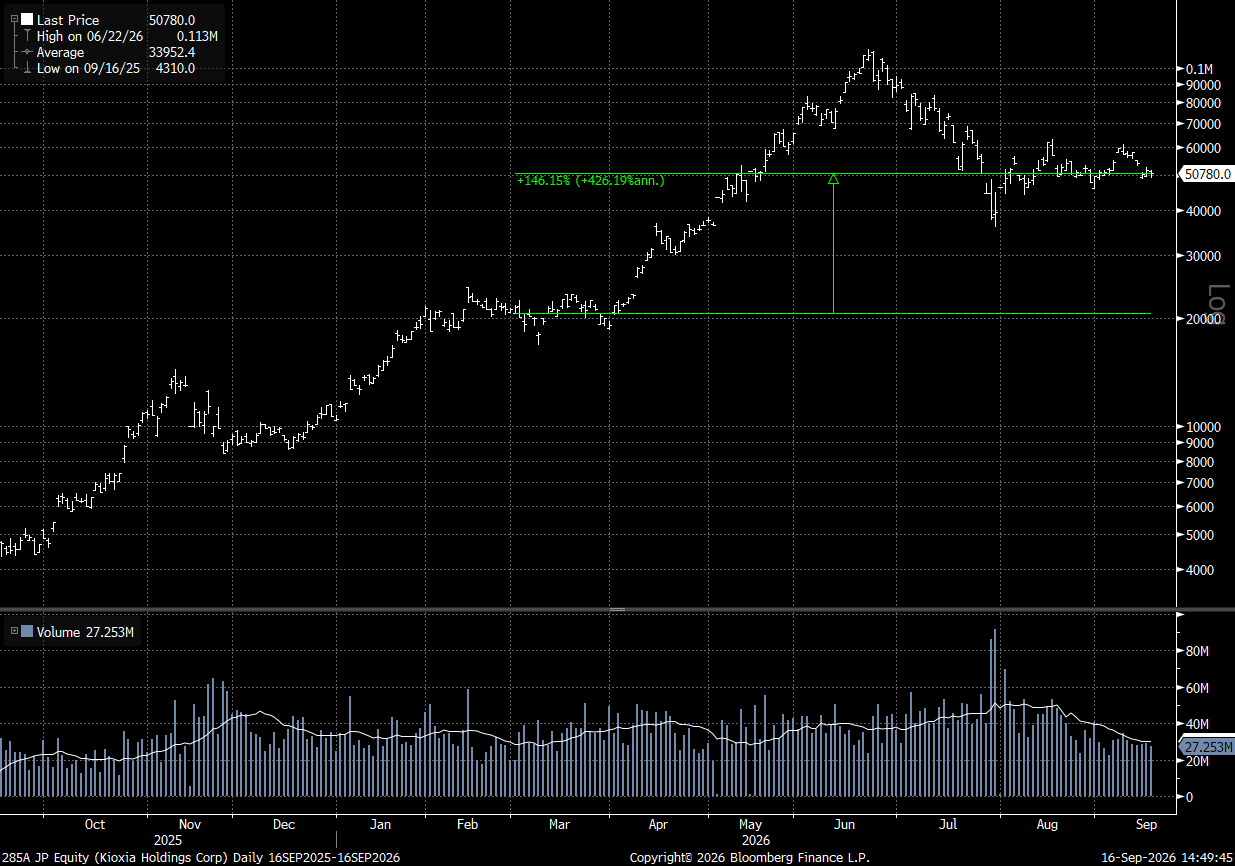
That piece was mostly about NAND, but hard drives were part of the story too. Nearline HDD supply was tight, which helped make high-capacity enterprise SSDs more attractive in certain workloads.
This time we wanted to look at the HDD side directly.
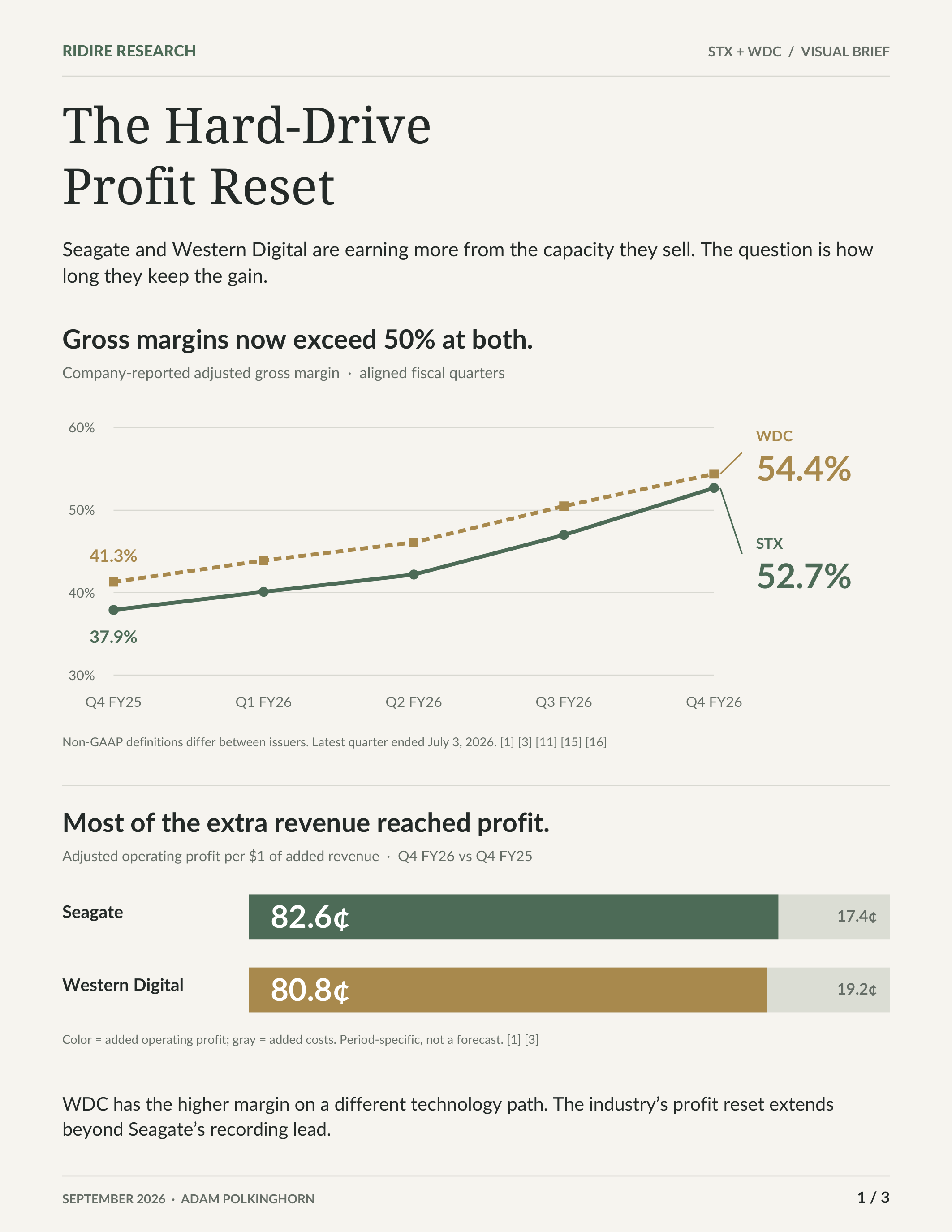
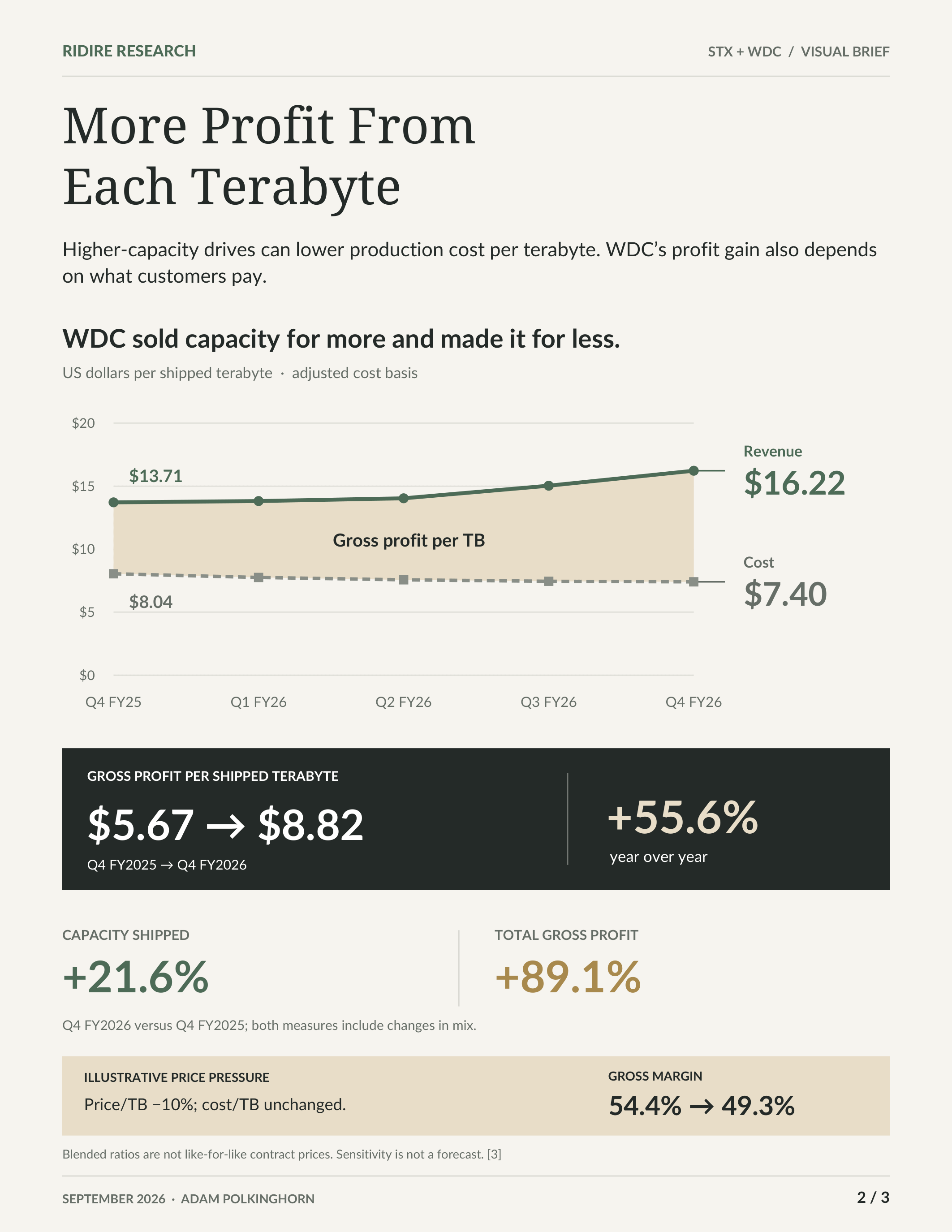
Seagate ($STX) and Western Digital ($WDC) have both seen a pretty dramatic improvement in profitability. In their latest fiscal fourth quarters, adjusted gross margins were above 50% for both companies, up from roughly 38% for STX and 41% for WDC a year earlier.
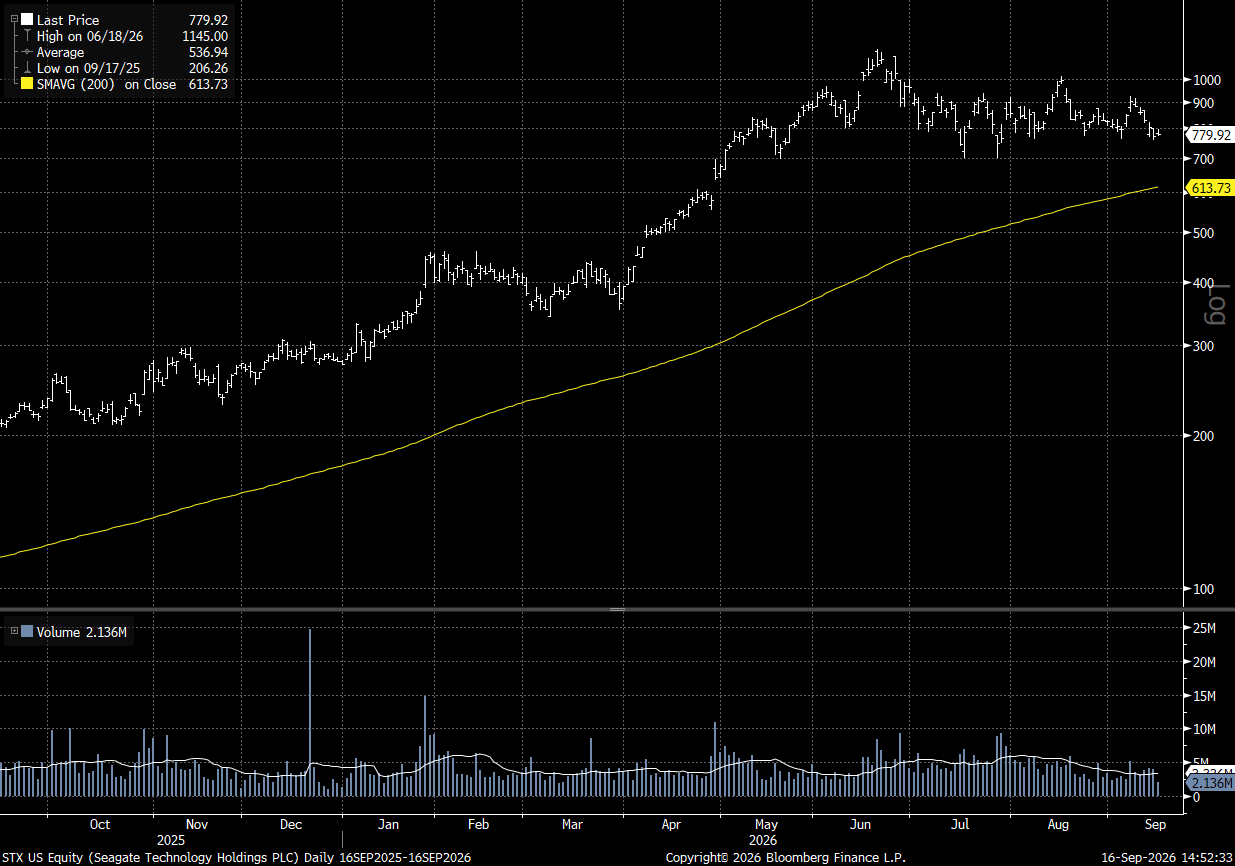
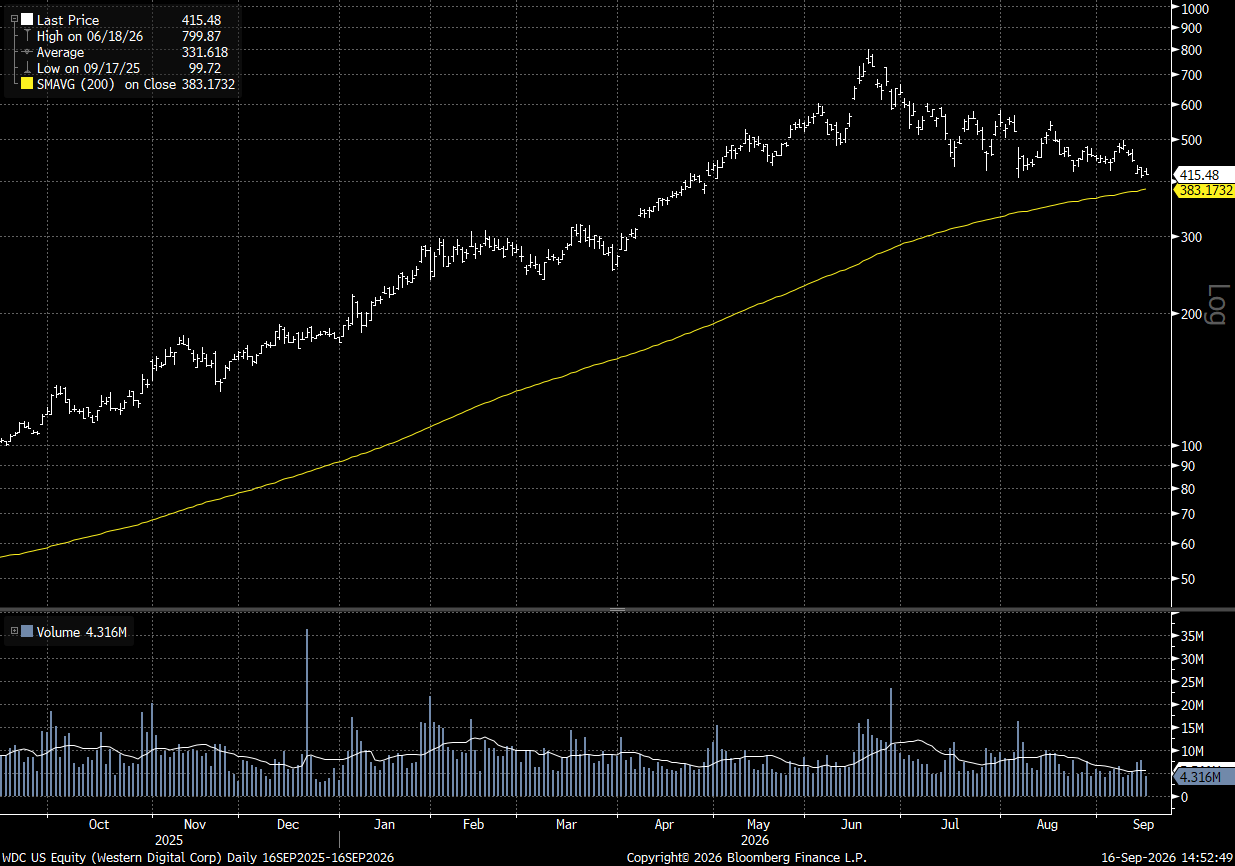
So the question isn’t really whether the cycle has improved. It clearly has.
The more interesting question is what happens from here?
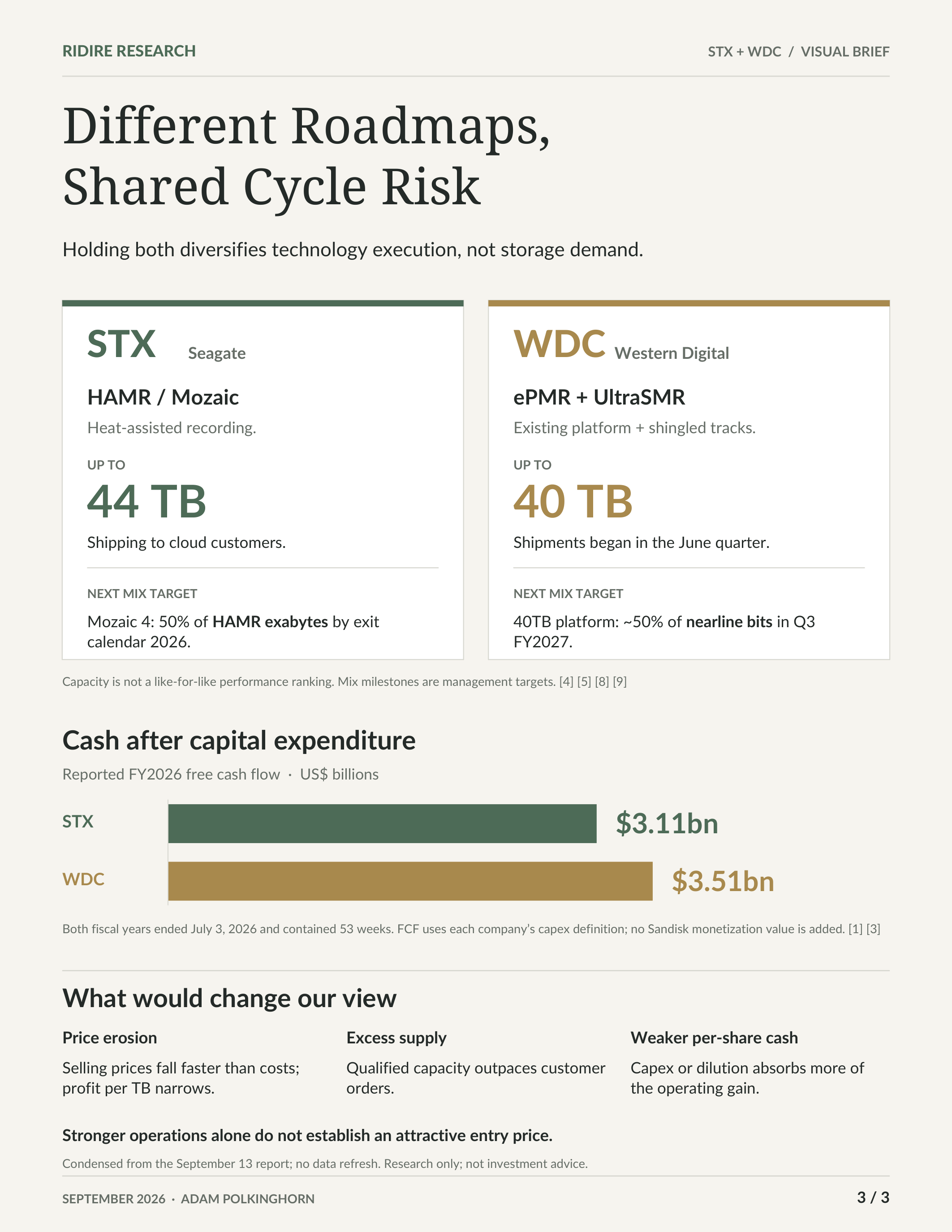
Both companies are pushing more capacity into each drive. That should keep bringing down cost per terabyte, which is great for margins if pricing holds.
But there’s a catch: more capacity per drive also means more supply.
So this really comes down to whether STX and WDC can keep some of those efficiency gains for themselves, or whether competition eventually gives them back to customers through lower pricing.
That’s what we’re looking at in this piece, and we think comparing the two together makes more sense than looking at either one in isolation.
The visual brief below is the compressed version, designed to be consumed quickly.
The full report at the end of this article goes deeper.
If you would like to read the full report with more details you may download it for free below:
